Dangerous Stereotypes: Bad Boys

I’m going to tackle some stereotypes present in modern fiction that I think are dangerous when used irresponsibly.  Any entries part of this series will be labeled as “Dangerous Stereotypes.”  The previous entry on this topic is about the Scientist stereotype, which can be read here.  

Click HERE for the Audio Edition!

God of Mischief
Image via desktop-wallpapers.net

People have interesting ways of coping with scary things.  Some deny their fear.  Some avoid what frightens them.  Some seek it out.  And many people, often women, seem to be taking what should be scary and try to make it cute.

I’m talking about the “bad boys.”

There are so many villainous characters out there with cute, sorrowful, gentle, loving, or chibi-fied pictures of them out on the internet.  Sometimes they are anti-heroes like Vegeta from Dragon Ball Z or Spike from Buffy the Vampire Slayer.  Sometimes they are villains like Voldemort from Harry Potter or Loki from the Marvel Comics.  Sometimes they are someone who flickers in between like Mr. Gold from Once Upon a Time.  And sometimes they are like Alucard from the anime and manga Hellsing. Alucard is the opposite of cute.  He’s one of, if not the most, badass, psychotic, murderous vampire in modern literature.  He’s fucking terrifying.  He’s murdered and drunk the blood of hundreds, perhaps thousands of people, human and vampire, and enjoyed it.  The only think that keeps him under control is the special spell that binds him to the will of the leader of the Hellsing Organization.  And he’s one of the GOOD guys!

Continue reading “Dangerous Stereotypes: Bad Boys”

The Cat’s Cradle Audio Edition!

Click HERE for the Audio Edition!


After years of research and development (or, more accurately, about three hours on YouTube), I finally tried recording one of my older entries from The Cat’s Cradle.  Wonder of wonders, it worked!  Sort of.  Since I won’t be able to do a more substantial entry this week, I wanted to take this opportunity and make some introductions.

For those of you just tuning in, I’m Kat Clements, a fantasy author-in-progress.  The Cat’s Cradle is my beta website and blog where I discuss topics related to writing, storytelling, fantasy, science fiction, and other geek-related material.  For the past three years, my entries have been solely text-based, but now I’ve decided to create audio versions for people who either don’t have the time or inclination to read from the computer and for those with visual impairments.

Continue reading “The Cat’s Cradle Audio Edition!”

To Blog Or Not To Blog

Click HERE for the Audio Edition!

(click image for source)

A few weeks ago, a friend of mine asked me if writers should have a blog.  Apparently, a lot of writing advice was telling them that keeping a blog is something modern writers should do.  Network, network, network!  But my friend was ambivalent about the whole idea.

In some ways, so am I.  At least one day every other week is devoted to that week’s entry.  They sneak into my word quota that should be reserved for fictional prose.  I often put it off until the last minute (like tonight), which adds some stress to my life, usually when I least need it.  But I’ve kept up with The Cat’s Cradle for three years.  Why?  And, more importantly, is it worth it?

The answer is, I don’t know yet.  I don’t know if having a blog will help unpublished writers gain a following and break out or if it’s a huge waste of time.  I don’t know how much it may contribute to my success (if in fact I do succeed in the traditional sense of publication with a proper company followed by modest monetary reward and readership.)  I don’t know if it’s “necessary.”

Continue reading “To Blog Or Not To Blog”

Are You A Fake Fan? (Comics Edition)

In light of recent developments in the comic, gamer, and cosplay worlds, I plan to do a series of entries about “fake fans” and how established fandoms treat newcomers, women, and minorities.  This first entry is the Comics Edition, wherein I focus on the comic book community.

Click HERE for the Audio Edition!

nofake  

How do you decide if someone is unworthy to be part of your fandom?  How do you label someone a poser, a noob, or a fake?  Whom do you invite into a fandom and why?  Whom do you reject and why?  What are the criteria to go from noob to knowledge-master?  How does someone graduate from being a “fake geek girl/boy” or “fake fan” into a “true fan”?  Is such a thing even possible?  

I’ve been reading a lot of articles lately about how unfriendly the nerd culture can be to newcomers, or even to established members if they start commenting on flaws with the status quo… especially if those members are women.  (Yes, #GamerGate, I’m looking at you.)  It seems like there are two prevailing extremes:  either the fans are portrayed as the most friendly, knowledgeable, welcoming group around, or they are seen as the most close-minded, antagonistic, sexist group alive.

So far, I’ve been fortunate to escape the fake geek label, but a lot of people, especially women, haven’t been so lucky.  And I have yet to learn of a standard for judging someone’s relative geekiness.  Is it the number of comics you read?  The variety?  The age?  The popularity?  Do you have to be super-obsessed with one particular facet of comics or do you have to have the entire history of Marvel and DC, or every plot contrivance of Batman on the tip of your tongue to qualify as a true fan?

Continue reading “Are You A Fake Fan? (Comics Edition)”

Dangerous Stereotypes: Scientists

I’m going to tackle some stereotypes present in modern fiction that I think are dangerous when used irresponsibly.  Any entries part of this series will be labeled as “Dangerous Stereotypes.”  The next entry on this topic is about the Bad Boys stereotype, which can be read here.

Click HERE for the Audio Edition!

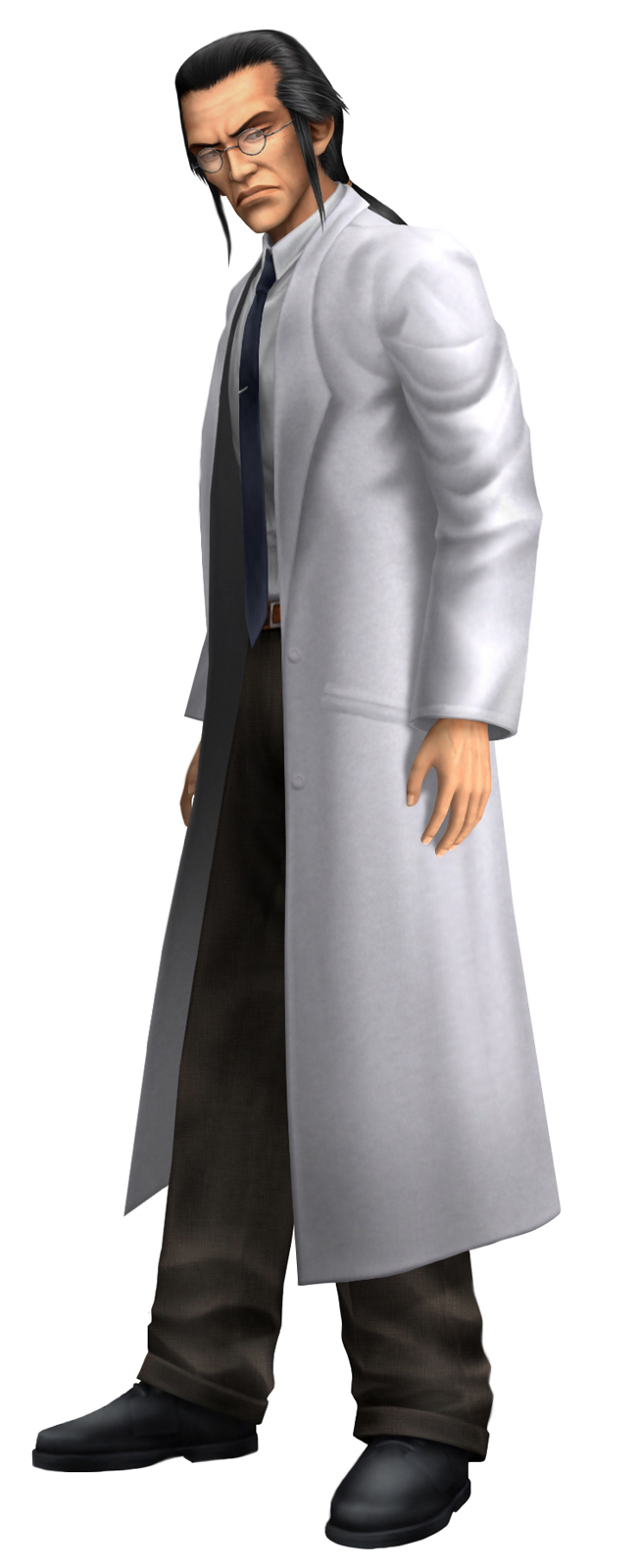
Professor Hojo (via Final Fantasy Wikia)

There is a nasty and detrimental stereotype in fiction:  the depiction of scientists.

In most instances, scientists are portrayed as too smart for their own good, too naive for their own good, or outright diabolical.  The threat in the story often arises from the hubris of scientists messing with something they either don’t fully understand or think they can control.  In such cases they are often called “mad” or “obsessed,” driven to complete their work, no matter the cost to themselves or to others.

Or, if the scientists aren’t deliberately malicious, they end up being naive to the extreme, not understanding how their research or experiments could be used to malicious ends.  Even if the scientist realizes his mistake (for they are almost always male), he tends to keep going “in the name of science” or is totally ineffectual at stopping the misuse of his work.  And if the scientist himself is absent from the story, the technology he created, often a robot with artificial intelligence, remains a danger, such as Superman’s foe Brainiac or HAL from 2001: A Space Odyssey.

The examples of the evil/mad scientist stereotype are myriad:  Hojo from the video game Final Fantasy VII.  Rotwang from the movie Metropolis.  Victor Frankenstein, creator of the quintessential monster in Mary Shelley’s masterpiece.  Almost any antagonist in superhero comics.  Pick a 1940s or 1950s horror or science fiction film and you’ll find that the monster or threat is, more often than not, the result of science gone wrong.

Even real people, including teens and children, who are not certified scientists, but who have an interest in that direction are often stereotyped as strange, anti-social, unattractive, and ultimately dangerous individuals.  They are often marginalized or bullied until, in a fit of childish pique (or well-planned retribution), they fight back the only way they know how:  with science and technology.  And in the end it’s up to the handsome, charming, muscle-bound male hero to save the day by blowing things up.  Seems like a bit of a cheap shot to me.  But why haven’t we moved beyond this rather lazy piece of character creation?

Continue reading “Dangerous Stereotypes: Scientists”

Quick Update (and placeholder)

Sorry everyone; there isn’t going to be a more substantial update this week because I’m finally indulging in a vacation.  However, I wanted to give a quick update (which will hopefully post on Monday automatically like it’s supposed to) on some things that are going on:

1)  On Friday, August 8, 2014, my first autonomous article for the online magazine Scoop was published!  It’s called “A Brief History of Steampunk” and I had a blast writing it.  Steampunk is such a rich and fairly new genre, and I hope I managed to interest both newcomers and experts alike.  Many thanks go to Mark and Jeff for giving me this opportunity.

2)  Since “Okami Amaterasu” is complete, I’ve chosen a new fanfic project to work on.  My Final Fantasy VII story, “Hidden Light,” has been languishing for several years while I puttered around with other projects.  But now I’m ready to get back to it and complete the story.  (The rest of it was already mapped out back in 2009…I just needed to write it!)  It features Vincent Valentine, one of my first bishonen crushes, and my FC Hikari, who was originally designed as a prototype for my Mariner Sequence character, Marella.  Thankfully Hikari and Marella have evolved into different people, but they share a lot of traits, and was my first experiment with writing a mentally damaged character.  Chapter 10 is already up, and you can expect Chapter 11 to be posted Monday, August 18!

3)  I’m hoping to feel more relaxed and recharged from my vacation.  The last few weeks have been a bit of a struggle.  Time to regain some equilibrium.

Milestones & Updates

Click HERE for the Audio Edition!
.
.

Hello, world!  It seems like writers spend a lot of time soul-searching in Angst-ville (myself included) so I wanted to share some good news!


1) ARTICLES!

(click image for link)

I got some articles published!  Fellow writer Mark Squirek is a columnist for the online newsletter Scoop.  He asked me to do a pair of articles for his column, “Cover Story,” which discusses the cover art of various comic books.  I got to pick any two covers I wanted and write about them!  I chose Space Family Robinson #23: “Menace from Uranus!” from 1967 and The Chronicles of Arcea #1: “The Athame” by Vyrhelle.  Many thanks to Mark for asking me to write for Scoop and to Mr. J.C. Vaughn, editor at Gemstone Publishing, for taking a chance on a new writer.  Also, my deepest gratitude to my friend Karen; editing all of those art papers paid off!  Working with Scoop has been a lot of fun, and I hope I’ll be able to continue writing for them.

Continue reading “Milestones & Updates”

Feminism in Fiction

Click HERE for the Audio Edition!

(click image for source)

Feminism is not a dirty word.  (I actually read a book recently with that statement in the title, and I stand by it.)  A lot of people shy away from the term “feminist” because they think it means “insane man-hating career/sex obsessed woman (who may or may not be a lesbian.)”  Even I’m careful hen using this term, lest my meaning be misconstrued.  While such people do exist, they are the extreme end of the spectrum and have no bearing on what I consider feminism.  That is, that women should be treated politically, socially, and economically as equals to men.

Fantasy and science fiction are wonderful because you can break so many stereotypes.  With a lot of realistic fiction, especially in historical fiction, there are certain limitations, certain expectations and roles that people play that can be difficult to change without losing a sense of authenticity.  But science fiction is usually set far into the future, often on other planets.  Fantasy deals in alternate realities and fairy tales.  The potential to explore and turn traditional gender/racial/economic/sexual roles upside down is all around!  And I’m sorry to say that a lot of writers who deal in science fiction and fantasy don’t take advantage of that potential.

Since a lot of fantasy is set in medieval look-alike worlds, we tend to get medieval values.  Women are passive objects to be won while men do all the fighting, rescuing, political maneuvering, and pretty much anything else interesting.  Science fiction often has male military leaders, male soldiers, male explorers…  Women are very often not present at all, or, if they are, they get regulated to sexual roles or are presented in a very wooden or unrealistic manner.

Obviously this isn’t the case for every fantasy or science fiction story.  And I should point out that while there is nothing inherently wrong with having characters fill traditional gender roles, that shouldn’t be the only role that they can play.  (And that goes for men as well as women.)  Older science fiction and fantasy often get a pass from me because the social mores of the time necessarily colors the way the plot and characters are presented.  But even in modern stories, I rarely see the envelop pushed.

We can be so much more than this.

Continue reading “Feminism in Fiction”

Liebster Blog Award

liebster21

A huge thank-you goes out to Endless Edits who nominated me for the Liebster Blog Award!  Please check out her site!  I was actually nominated for the award a few years ago when I was on Blogspot, but I’m happy that my new and improved blog has been nominated as well!

There are a few rules for accepting the Liebster Award, they are: thank your nominator and link back to their website, answer your nominator’s questions, leave 11 facts about yourself, nominate 5 or more blogs with under 200 followers and give them 11 questions to answer. 

So, here are the 11 questions that E.E. posed to me:

Continue reading “Liebster Blog Award”