Houseboats in Space

Click HERE for the Audio Edition!
.
.
At the beginning of the July 2016 Camp NaNoWriMo, I was in the mood for some old-school anime.  During Camp NaNo in July 2013, I’d inter-spaced bouts of writing with episodes of an anime called Black Jack.  Every so many hours, words, or pages, I would reward myself with an episode or two.  It got me through the month and it was an enjoyable show.  This time, I decided to start watching an anime I’d been eyeing for a while.  It’s called Space Pirate Captain Harlock, and I cannot express how hooked I currently am.  It’s got that gorgeous old-school look that only anime from the late 70s and early 80s have.  The drama is totally over-the-top, the science is out of whack or non-existent, and the plot lurches around like a drunken sailor.  But the characters are so endearing and the adventures are so fun that I don’t even mind it.  That’s just part of the experience.  In fact, I’ve actually had to stop watching it for now because it makes me want to write about pirate ships and space operas, not steampunk or romances.  (Oops.  Wrong choice for this project’s inspirational material.)

Captain Harlock

Still, as I was watching the first several episodes of Captain Harlock on Crunchyroll, I started thinking about all of the other science fiction anime and TV shows that heavily feature nautical themes and emphasize the tight-knit family unit that the crews of these ships become.  In Captain Harlock, this takes place on board the Arcadia.  In Last Exile, the first anime I ever watched, it’s the Silvana.  In the original Mobile Suit Gundam, we have the White Base.  (The power of the Bright-slap compels you! …*ahem* Yes, well, moving on.)  In Space Battleship Yamato it’s… er, well, the Yamato.  (Yes, I know that was redundant.)

Then you have all of the English TV shows and films, like the Enterprise from Star Trek, the Millennium Falcon from Star Wars, Serenity from Firefly, Battlestar Galactica from… um, well, Battlestar Galactica. (Yes, yes, I know, more redundancy.)  And to top that off there are good old-fashioned ocean-going vessels: the Defiant, the Albatrossthe HMS Surprise, and Captain Nemo’s submarine the Nautilus, to name a few.
Continue reading “Houseboats in Space”

Inferior Origins

Click HERE for the Audio Edition! 

Kira at the Gelfling Wall of Destiny (screenshot from The Dark Crystal)
Kira at the Wall of Destiny

.

Who doesn’t love a good origin story?

Whenever I get into a fictional universe, be it books, movies, TV shows, or video games, I dig deep.  Those characters with shady or mysterious pasts are the most intriguing; we want to know how they became the person we know now.  If you’ve read (and enjoyed) The Symphony of Ages series by Elizabeth Haydon, you probably want to know Achmed’s full backstory more than anything else.  We get tantalizing hints, but no more.  Tolkien’s book The Silmarillion explores the history of the elves and Middle-Earth in almost excruciating detail.  People clamored so much for more stories about Drizzt Do’Urden that R.A. Salvatore gave them the drow ranger’s backstory in the form of The Dark Elf Trilogy.  Amazing RPGs like Mass Effect and Dragon Age cover the history of their worlds, the aspects of the places explored there, and the characters you encounter.  And isn’t that what a lot of modern RPGs are all about?  Exploration?  How was this world created?  What happened before the story that we see?  A good origin story is a fascinating and rewarding journey.

Of course, the key word here is “good.”  Not knowing parts of a universe’s history or the origins of a character leads to all kinds of juicy speculation, head canon, and fan fiction.  Sometimes the creators even deign to answer those burning questions for us.  That’s fine and dandy, but there is a dark side to it.  No matter how much I may want to know, “What happened?!” a part of me is always a bit wary when official works drop in to fill the gaps.

Continue reading “Inferior Origins”

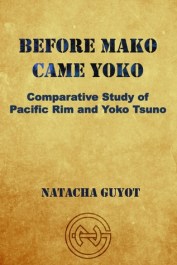
Book Review! “Before Mako Came Yoko: A Comparative Study” by Natacha Guyot


This entry is part of “Natacha Guyot’s Blook Blog Tour!”


.

BeforeMakoCameYokoCover

I don’t usually care much for summer blockbusters, which usually have more explosions than compelling emotions.  However, Pacific Rim is one of those rare “popcorn movies” that I felt gave a layer of depth to its characters.  I confess that I was surprised to see Mako, a female Japanese Jaeger pilot, get as much screen time and character arc as she did!  Women as primary main characters is becoming more prominent, albeit slowly, and there is still a dearth of women of color in such roles.  Pacific Rim provided a step in the right direction, even if it fell short on certain points.  But I was unaware that a long-running 1970s comic book series from Belgium had already allowed a female Asian character to step into the spotlight.  Natacha Guyot’s brief but engaging treatise Before Mako Came Yoko: A Comparative Study Between Pacific Rim and Yoko Tsuno elaborates on how the title character of Yoko Tsuno and Mako of Pacific Rim share many key traits.

The book is divided into three parts that explore these similarities, as well as a few of their short-comings.  The first part, “Women of Color as a Female Lead Character” explores the history of the two characters as they developed through their respective media.  While Yoko has four decades of story to draw on and develop from, Mako only has a single film.  Yet both present strong, well-rounded, engaging characters who aren’t reduced to eye candy, exotic tokens, or inevitable love interests by the presence of male associates.  (However, like Ms. Guyot, I would have preferred Mako as the main character and focus of Pacific Rim, since I found her origins and presentation far more interesting than that of the male lead!)

The second part is “Combat, Science, and Compassion,” which looks at the skill sets Yoko and Mako possess that helps make them real people and helps solidify their importance and relevance to the plots of their respective stories.  Scientific knowledge and martial arts are a shared skill set, although Yoko Tsuno touches on religion and spirituality in a way that has little to no place in Pacific Rim.  A big difference is that Yoko faces danger on a more or less regular basis throughout the comics.  Mako doesn’t have the opportunity to fight her enemies, the alien Kaiju, until well into the film, and even then, only for a short time.  Visually and narratively, Mako and Yoko break the mold in progressive ways.

“Composite Family and Inner Circle” comprises the final section.  Yoko and Mako share many similarities in their creation of a new “family” outside their blood relations.  With so many years of development, Yoko has far outpaced Mako in this area.  This may be a necessity of the medium, but there is hope that future installments of Pacific Rim will expand on Mako’s role in the story and her circle of friends.

Before Mako Came Yoko is an intriguing look into the world of representation for female and minority characters in media. It draws connections between modern cinema and classic comics to show how progressive some of these characters are… and how far we still have to go. Be sure to check out Ms. Guyot’s website for other books and articles discussing similar topics in Star Wars, Farscape, and more!


natachaguyotNatacha Guyot is a French researcher, author and public speaker. She holds two Master’s degrees: Film and Media Studies (Paris III Sorbonne Nouvelle) and Digital Culture and Technology (King’s College London).

Her main fields of interest are Science fiction, Gender Studies, Children Media and Fan Studies. Besides her nonfiction work, she also writes Science Fiction and Fantasy stories.

Natacha’s Publications     |     Twitter     |     Facebook     |     LinkedIn

Does Diversity Hold Back Space Exploration?

Click HERE for the Audio Edition!

DISCLAIMER:  This entry is only a thought exercise!  I am not proposing that one stance is better than the other, nor do I condone extreme positions either for or against the diversification or homogenization of any culture(s). 

Project Orion: one of the coolest ships that was never built. (Artwork by Adrian Mann)

I recently read an article about NASA testing equipment and programs that will theoretically carry humans to Mars.  Part of me was really happy about it, but at the same time, I was also disappointed because the federal space program is pretty much dead due to lack of funds.  NASA is getting just enough to play around with ideas and reinvent the wheel, but not enough to actually do anything substantial.  The private sector may yet succeed with companies like SpaceX, but the lack of interest in space exploration is so discouraging that I sometimes fear we’ll never reach beyond our planet before the next great extinction.

Continue reading “Does Diversity Hold Back Space Exploration?”

Contrivance and Coincidence

Click HERE for the Audio Edition!


“But people don’t act like that.” [W. Somerset] Maugham pointed to the grave dangers coiled in that treacherous phrase. Our demand for probability grows more and more stringent. We balk at coincidence and accident. We invariably expect the characters who are presented to act like ourselves. “People don’t act like that?” True enough — MOST people don’t act like that. Your story is not ABOUT most people. The true enemy of your fiction is not improbability but imaginative unbelief.

— Stephen Koch, The Modern Library Writer’s Workshop: A Guide to the Craft of Fiction,  (page 185)

As I’ve been working through my current draft of All’s Fair, there’s a certain element that keeps coming up that I think needs to be addressed:  contrivance and coincidence.

We’ve all see or read stories where characters end up in exactly the right place at exactly the right time.  Or they find what they need to beat the bad guy minutes before facing off in the final fight.  Or they are about to die and rescue arrives just in the nick of time with no explanation of where they were and how they got there so fast.  It’s more blatant in some stories than in others.  When done badly, it can destroy the suspension of disbelief necessary to maintain a story.  No writer wants that to happen to their story.  Events are supposed to be seamless, flawless, inevitable.  We want to present them in the most effective, realistic, and logical manner possible.  We don’t want anything to seem contrived.

Well, I’ve some bad news for you: all stories are contrived.

Continue reading “Contrivance and Coincidence”

Reflections on Star Wars

Click HERE for the Audio Edition!

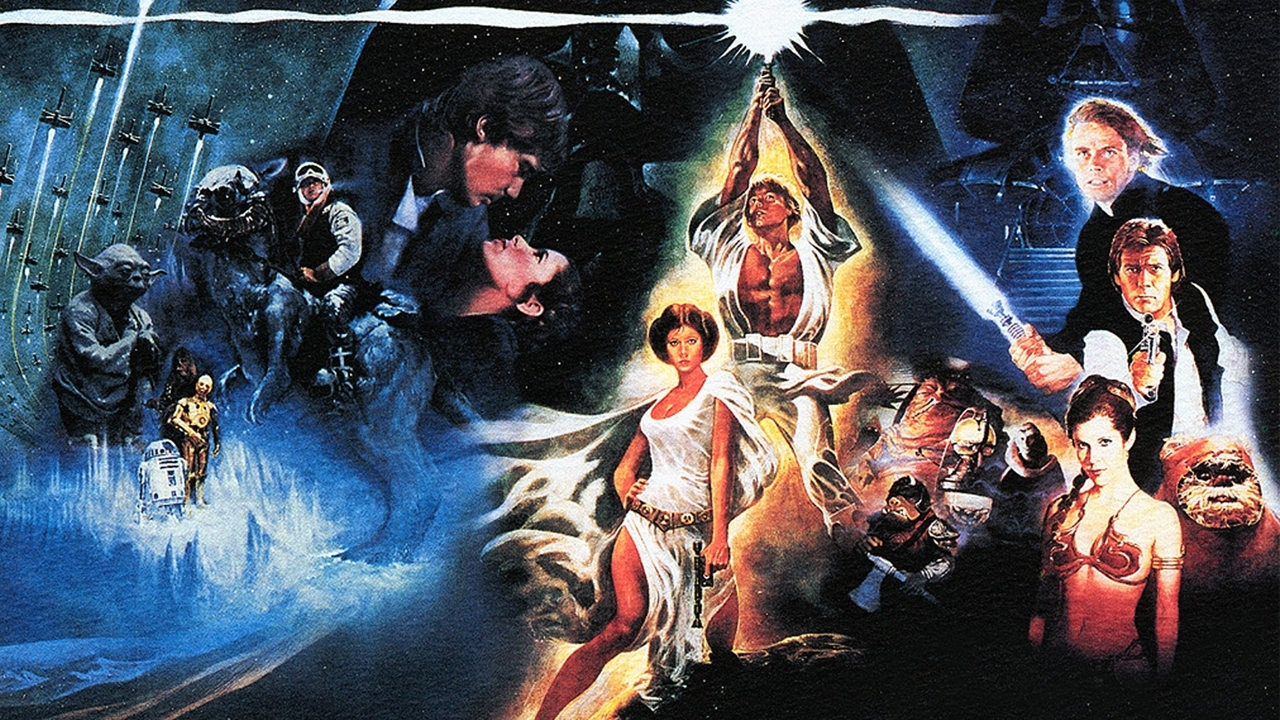
originalstarwarstrilogy

Happy Star Wars Day everyone!

I’m sure many folks are tired of seeing Star Wars-related posts, videos, pictures, sales, and general internet celebrations by now… but I don’t think I’ve ever shared my own formative experience with these films.  I’m not old enough to have seen the Original Trilogy in theaters (Episodes IV, V, and VI), but I was one of the young people who went to see the Prequel Trilogy on the big screen (Episodes I, II, and III).  Children growing up after the release of the Prequel Trilogy will never experience a time, like I did, when there were only three Star Wars films.

I don’t remember exactly how old I was when I first watched Star Wars.  Probably seven or eight years old at a guess, maybe even six.  I don’t remember my very first viewing or my initial reaction to them.  I don’t recall ever hearing or seeing anything about Star Wars before this point.  (I was shy, home-schooled, and far more interested in My Little Pony and Grand Champions than with space ships.)  One of the earliest memories I do have is of holding the VHS tape of The Empire Strikes Back, entranced by the cover.  I’m not sure if this took place before I actually watched the movies or after; I was fond of sneaking peeks at films and books that were outside my age range.  (I used to slink over to the Adult Fiction section of the library like a little wanna-be ninja.  It felt so… illicit; I always expected to be caught and booted back to the children’s area by a librarian.)  In any case, I must have liked A New Hope, The Empire Strikes Back, and Return of the Jedi, because I watched them again.

And again.

And again.

Continue reading “Reflections on Star Wars”

Dangerous Stereotypes: Bad Boys

I’m going to tackle some stereotypes present in modern fiction that I think are dangerous when used irresponsibly.  Any entries part of this series will be labeled as “Dangerous Stereotypes.”  The previous entry on this topic is about the Scientist stereotype, which can be read here.  

Click HERE for the Audio Edition!

God of Mischief
Image via desktop-wallpapers.net

People have interesting ways of coping with scary things.  Some deny their fear.  Some avoid what frightens them.  Some seek it out.  And many people, often women, seem to be taking what should be scary and try to make it cute.

I’m talking about the “bad boys.”

There are so many villainous characters out there with cute, sorrowful, gentle, loving, or chibi-fied pictures of them out on the internet.  Sometimes they are anti-heroes like Vegeta from Dragon Ball Z or Spike from Buffy the Vampire Slayer.  Sometimes they are villains like Voldemort from Harry Potter or Loki from the Marvel Comics.  Sometimes they are someone who flickers in between like Mr. Gold from Once Upon a Time.  And sometimes they are like Alucard from the anime and manga Hellsing. Alucard is the opposite of cute.  He’s one of, if not the most, badass, psychotic, murderous vampire in modern literature.  He’s fucking terrifying.  He’s murdered and drunk the blood of hundreds, perhaps thousands of people, human and vampire, and enjoyed it.  The only think that keeps him under control is the special spell that binds him to the will of the leader of the Hellsing Organization.  And he’s one of the GOOD guys!

Continue reading “Dangerous Stereotypes: Bad Boys”

Dangerous Stereotypes: Scientists

I’m going to tackle some stereotypes present in modern fiction that I think are dangerous when used irresponsibly.  Any entries part of this series will be labeled as “Dangerous Stereotypes.”  The next entry on this topic is about the Bad Boys stereotype, which can be read here.

Click HERE for the Audio Edition!

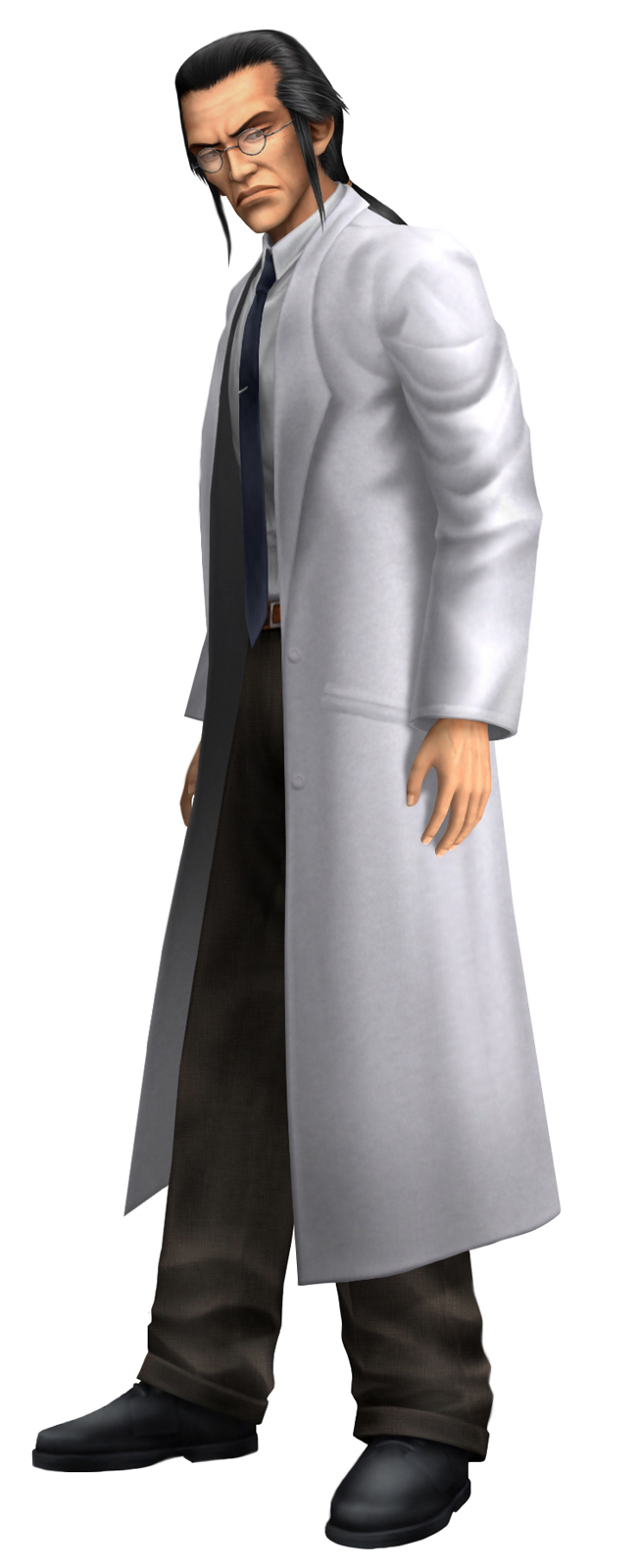
Professor Hojo (via Final Fantasy Wikia)

There is a nasty and detrimental stereotype in fiction:  the depiction of scientists.

In most instances, scientists are portrayed as too smart for their own good, too naive for their own good, or outright diabolical.  The threat in the story often arises from the hubris of scientists messing with something they either don’t fully understand or think they can control.  In such cases they are often called “mad” or “obsessed,” driven to complete their work, no matter the cost to themselves or to others.

Or, if the scientists aren’t deliberately malicious, they end up being naive to the extreme, not understanding how their research or experiments could be used to malicious ends.  Even if the scientist realizes his mistake (for they are almost always male), he tends to keep going “in the name of science” or is totally ineffectual at stopping the misuse of his work.  And if the scientist himself is absent from the story, the technology he created, often a robot with artificial intelligence, remains a danger, such as Superman’s foe Brainiac or HAL from 2001: A Space Odyssey.

The examples of the evil/mad scientist stereotype are myriad:  Hojo from the video game Final Fantasy VII.  Rotwang from the movie Metropolis.  Victor Frankenstein, creator of the quintessential monster in Mary Shelley’s masterpiece.  Almost any antagonist in superhero comics.  Pick a 1940s or 1950s horror or science fiction film and you’ll find that the monster or threat is, more often than not, the result of science gone wrong.

Even real people, including teens and children, who are not certified scientists, but who have an interest in that direction are often stereotyped as strange, anti-social, unattractive, and ultimately dangerous individuals.  They are often marginalized or bullied until, in a fit of childish pique (or well-planned retribution), they fight back the only way they know how:  with science and technology.  And in the end it’s up to the handsome, charming, muscle-bound male hero to save the day by blowing things up.  Seems like a bit of a cheap shot to me.  But why haven’t we moved beyond this rather lazy piece of character creation?

Continue reading “Dangerous Stereotypes: Scientists”

Feminism in Fiction

Click HERE for the Audio Edition!

(click image for source)

Feminism is not a dirty word.  (I actually read a book recently with that statement in the title, and I stand by it.)  A lot of people shy away from the term “feminist” because they think it means “insane man-hating career/sex obsessed woman (who may or may not be a lesbian.)”  Even I’m careful hen using this term, lest my meaning be misconstrued.  While such people do exist, they are the extreme end of the spectrum and have no bearing on what I consider feminism.  That is, that women should be treated politically, socially, and economically as equals to men.

Fantasy and science fiction are wonderful because you can break so many stereotypes.  With a lot of realistic fiction, especially in historical fiction, there are certain limitations, certain expectations and roles that people play that can be difficult to change without losing a sense of authenticity.  But science fiction is usually set far into the future, often on other planets.  Fantasy deals in alternate realities and fairy tales.  The potential to explore and turn traditional gender/racial/economic/sexual roles upside down is all around!  And I’m sorry to say that a lot of writers who deal in science fiction and fantasy don’t take advantage of that potential.

Since a lot of fantasy is set in medieval look-alike worlds, we tend to get medieval values.  Women are passive objects to be won while men do all the fighting, rescuing, political maneuvering, and pretty much anything else interesting.  Science fiction often has male military leaders, male soldiers, male explorers…  Women are very often not present at all, or, if they are, they get regulated to sexual roles or are presented in a very wooden or unrealistic manner.

Obviously this isn’t the case for every fantasy or science fiction story.  And I should point out that while there is nothing inherently wrong with having characters fill traditional gender roles, that shouldn’t be the only role that they can play.  (And that goes for men as well as women.)  Older science fiction and fantasy often get a pass from me because the social mores of the time necessarily colors the way the plot and characters are presented.  But even in modern stories, I rarely see the envelop pushed.

We can be so much more than this.

Continue reading “Feminism in Fiction”

Dealing with Discouragement

Recently, a friend and fellow writer told me they felt discouraged about writing. They were upset about so many people being unable to spot the differences between a good story and a bad story.  Real gems languish in dusty corners while insults to the English language fly off the shelves.  And not just books, but movies too.  Their question was: “If people can’t tell the difference between good and bad stories, why put forth the effort of crafting a really good story?”  Thinking out the rules of the world, creating three-dimensional characters, filling plot holes to make a seamless narrative…all of that takes work.  And if people don’t notice and don’t care, then why bother?

(NOTE: The movie links contain spoilers!)

Continue reading “Dealing with Discouragement”