The good news is, I have definitely reached the point with my novel, Ravens and Roses, where I have very little writing left to do. There are still a few missing scenes, some background information that needs to be hammered out, and a bunch of scene revisions… but for the most part, it’s ready for the next step. I have a manuscript ready to be edited. Go me!
I’m going to tackle some stereotypes present in modern fiction that I think are dangerous when used irresponsibly. Any entries part of this series will be labeled as “Dangerous Stereotypes.” The previous entry on this topic is about the Scientist stereotype, which can be read here.
People have interesting ways of coping with scary things. Some deny their fear. Some avoid what frightens them. Some seek it out. And many people, often women, seem to be taking what should be scary and try to make it cute.
I’m talking about the “bad boys.”
There are so many villainous characters out there with cute, sorrowful, gentle, loving, or chibi-fied pictures of them out on the internet. Sometimes they are anti-heroes like Vegeta from Dragon Ball Z or Spike from Buffy the Vampire Slayer. Sometimes they are villains like Voldemort from Harry Potter or Loki from the Marvel Comics. Sometimes they are someone who flickers in between like Mr. Gold from Once Upon a Time. And sometimes they are like Alucard from the anime and manga Hellsing. Alucard is the opposite of cute. He’s one of, if not the most, badass, psychotic, murderous vampire in modern literature. He’s fucking terrifying. He’s murdered and drunk the blood of hundreds, perhaps thousands of people, human and vampire, and enjoyed it. The only think that keeps him under control is the special spell that binds him to the will of the leader of the Hellsing Organization. And he’s one of the GOOD guys!
I saw this Reading Habits tag on Natacha Guyot’s blog and thought I would also take this little survey. You are welcome to do so as well!
“My Books” by Starsister12
Question #1: Do you have a certain place at home for reading?
I can read pretty much anywhere at home, but there are a few places I gravitate towards. The first is the side of my couch farthest from the door, right under my reading lamp. The second is back in my library on my window seat. I also enjoy reading outside on the porch or even at the kitchen table, but those tend to not be as comfortable, especially during the winter.
Question #2: Bookmark or a random piece of paper?
Whatever is handy. I have tons of bookmarks but they tend to live in a neat stack in my desk drawer, so I usually end up stuck with whatever paper I can scrounge. The one thing I will NOT do is bend a page corner to mark my spot. *shudders*
Question #3: Can you stop reading anytime you want or do you have to stop at a certain page, chapter, part, etc.?
Eh, I can stop wherever I need to, but I prefer to stop at the end of a chapter. If I can’t do that, I try to reach the end of a section or paragraph, or the bottom of a page. That way I can pick up the action easier when I return.
Question #4: Do you eat or drink while reading?
All the time. I usually drink water or tea (hot or cold) and I favor sweet snacks, or anything else that I can easily munch with one hand with the other turns the pages. I also read while eating on my lunch break at work.
Question #5: Can you read while listening to music/watching TV?
No. If I really try I can read while someone has music going, but it’s hard for me to focus. And forget the TV; I need to either shut it off or leave the room. I prefer silence and no one else in the room in order to get the full experience. (Cats, however, at welcome, even encouraged, to sit on my lap while I read.)
Question #6: One book at a time, or several at once?
I used to be a one-book-at-a-time kind of gal. Now I often have several going at once. I prefer to have nonfiction or short story collections for work because they can be devoured in small chunks. Novels are better for home because I have larger swathes of time to devote to them. If I book deeply engrossed me, I will read it straight through without break. If it isn’t holding my attention as well (which isn’t a good sign), I’ll start up something else to vary things.
Question #7: Reading at home or everywhere?
Anywhere. I would sooner leave the house without my keys, wallet, or clothes than forget my book.
Question #8: Reading out loud or silently in your head?
Silently in my head. I actually don’t “hear” words when I read, so I can get through books very fast. Alas, my retention of said book often does not extend beyond recalling whether I liked it or not. It also makes reading aloud difficult because I don’t feel the rhythm that the words are supposed to have, or the inflection or pronunciation. And my eyes travel faster than my mouth, so I often get tongue-tied if I try reading aloud.
Question #9: Do you read ahead or skip pages?
I never skip pages. Okay, except for the feasts in Brian Jacques Redwall series. Because those bore the pants off of me. And I don’t skip ahead unless I’m getting really bored, and even then, I just flip through, letting my eyes catch a sentence or two before going back to my spot. I never used to do that, but sometimes I need a little premonition to keep going.
Question #10: Breaking the spine or keeping it new?
I try very, very hard to keep my books in good condition. A lot are old library books I got from sales, so many already have broken spines. However, I am not a fanatic. After all, books are meant to be read and as long as they aren’t deliberately abused, I understand a little spine-cracking. However, this only applies to my own books. If I lend my books out to someone, or if someone lends me a book, I expect to have it back (or to send it back) in the exact condition I received it.
Question #11: Do you write in books?
Only nonfiction books that I own, mostly related to writing. And I still have some old text books with my notes in them.
I’m going to tackle some stereotypes present in modern fiction that I think are dangerous when used irresponsibly. Any entries part of this series will be labeled as “Dangerous Stereotypes.” The next entry on this topic is about the Bad Boys stereotype, which can be read here.
There is a nasty and detrimental stereotype in fiction: the depiction of scientists.
In most instances, scientists are portrayed as too smart for their own good, too naive for their own good, or outright diabolical. The threat in the story often arises from the hubris of scientists messing with something they either don’t fully understand or think they can control. In such cases they are often called “mad” or “obsessed,” driven to complete their work, no matter the cost to themselves or to others.
Or, if the scientists aren’t deliberately malicious, they end up being naive to the extreme, not understanding how their research or experiments could be used to malicious ends. Even if the scientist realizes his mistake (for they are almost always male), he tends to keep going “in the name of science” or is totally ineffectual at stopping the misuse of his work. And if the scientist himself is absent from the story, the technology he created, often a robot with artificial intelligence, remains a danger, such as Superman’s foe Brainiac or HAL from 2001: A Space Odyssey.
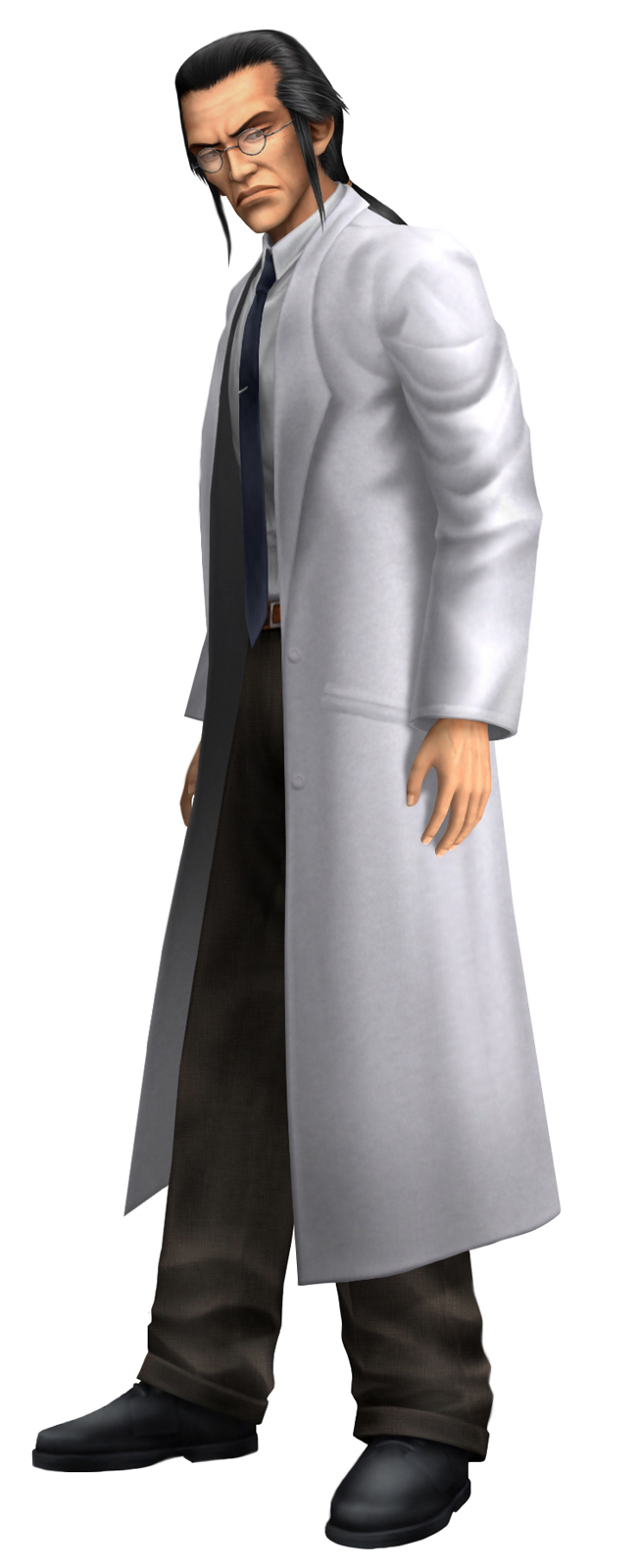
The examples of the evil/mad scientist stereotype are myriad: Hojo from the video game Final Fantasy VII. Rotwang from the movie Metropolis. Victor Frankenstein, creator of the quintessential monster in Mary Shelley’s masterpiece. Almost any antagonist in superhero comics. Pick a 1940s or 1950s horror or science fiction film and you’ll find that the monster or threat is, more often than not, the result of science gone wrong.
Even real people, including teens and children, who are not certified scientists, but who have an interest in that direction are often stereotyped as strange, anti-social, unattractive, and ultimately dangerous individuals. They are often marginalized or bullied until, in a fit of childish pique (or well-planned retribution), they fight back the only way they know how: with science and technology. And in the end it’s up to the handsome, charming, muscle-bound male hero to save the day by blowing things up. Seems like a bit of a cheap shot to me. But why haven’t we moved beyond this rather lazy piece of character creation?
Feminism is not a dirty word. (I actually read a book recently with that statement in the title, and I stand by it.) A lot of people shy away from the term “feminist” because they think it means “insane man-hating career/sex obsessed woman (who may or may not be a lesbian.)” Even I’m careful hen using this term, lest my meaning be misconstrued. While such people do exist, they are the extreme end of the spectrum and have no bearing on what I consider feminism. That is, that women should be treated politically, socially, and economically as equals to men.
Fantasy and science fiction are wonderful because you can break so many stereotypes. With a lot of realistic fiction, especially in historical fiction, there are certain limitations, certain expectations and roles that people play that can be difficult to change without losing a sense of authenticity. But science fiction is usually set far into the future, often on other planets. Fantasy deals in alternate realities and fairy tales. The potential to explore and turn traditional gender/racial/economic/sexual roles upside down is all around! And I’m sorry to say that a lot of writers who deal in science fiction and fantasy don’t take advantage of that potential.
Since a lot of fantasy is set in medieval look-alike worlds, we tend to get medieval values. Women are passive objects to be won while men do all the fighting, rescuing, political maneuvering, and pretty much anything else interesting. Science fiction often has male military leaders, male soldiers, male explorers… Women are very often not present at all, or, if they are, they get regulated to sexual roles or are presented in a very wooden or unrealistic manner.
Obviously this isn’t the case for every fantasy or science fiction story. And I should point out that while there is nothing inherently wrong with having characters fill traditional gender roles, that shouldn’t be the only role that they can play. (And that goes for men as well as women.) Older science fiction and fantasy often get a pass from me because the social mores of the time necessarily colors the way the plot and characters are presented. But even in modern stories, I rarely see the envelop pushed.
A huge thank-you goes out to Endless Edits who nominated me for the Liebster Blog Award! Please check out her site! I was actually nominated for the award a few years ago when I was on Blogspot, but I’m happy that my new and improved blog has been nominated as well!
There are a few rules for accepting the Liebster Award, they are: thank your nominator and link back to their website, answer your nominator’s questions, leave 11 facts about yourself, nominate 5 or more blogs with under 200 followers and give them 11 questions to answer.
So, here are the 11 questions that E.E. posed to me:
At some point during the world-building process, writers run into the issue of faith. What do your characters believe in? What is their religion, if they have one? What religions are present in the world you’ve created and how do they affect that world? Fantasy is usually not a godless place; in fact, it’s rift with religious ideas.
Fantasy books traditionally have polytheistic leanings because… well, it’s easiest. The pantheon of gods and goddesses is often very active in the world, and special priests or priestesses known as “clerics” or holy warriors called “paladins” can call directly on their patron god/goddess for help in battle or healing. It’s often indistinguishable from magic… but the source is divine. Krynn from Dragonlance and Faerûn from The Forgotten Realms are two massive fantasy worlds with hundreds of books that have very active and localized pantheons. In these worlds, there is no question about the existence of gods and goddesses because the effects of their power can be very clearly seen. The afterlife of heaven and hell or somewhere in between is very, very real.
Recently, a friend and fellow writer told me they felt discouraged about writing. They were upset about so many people being unable to spot the differences between a good story and a bad story. Real gems languish in dusty corners while insults to the English language fly off the shelves. And not just books, but movies too. Their question was: “If people can’t tell the difference between good and bad stories, why put forth the effort of crafting a really good story?” Thinking out the rules of the world, creating three-dimensional characters, filling plot holes to make a seamless narrative…all of that takes work. And if people don’t notice and don’t care, then why bother?
I’m currently working on the script for my manga project Astral Rain for the April edition of Camp NaNoWriMo 2014. Well, more accurately, I’ve been working on a lot of background notes, plot notes, and world-building because I noticed that a lot of that hadn’t been worked out in advance. As I was writing, I came across the article “I’m Demanding Better Representation For Black Girl Nerds in Geek Culture” by Chaka Cumberbatch. And that’s when it hit me: all of my characters in Astral Rain are white.
Granted, it’s supposed to be an OEL (Original English Language) manga, and most anime and manga lack people of color. I have no problem featuring white characters, but what surprised me is that the idea of any of the cast of Astral Rain being anything but fair-skinned never occurred to me. And that concerns me.
I posted about my favorite genre way back in 2011, and honestly, not much has changed. Fantasy remains my favorite, hands down. I do read science fiction, nonfiction, some YA and realistic fiction, but fantasy is my realm. I’m not especially picky about which subset of fantasy it is either. Urban, swords-and-sorcery, traditional epic, dark, paranormal romance, remade fairy tales, or any combination of the above…I enjoy them all.
The first book I remember reading was D’Aulair’s Book of Greek Myths when I was four. I also remember my Dad reading books of fairy tales from the Brothers Grimm and Hans Christian Anderson, most of which are rather dark fare for children. But with fairy tales, no matter how gruesome things get, the hero (or heroine) always beats the odds. Evil-doers are punished and the good are rewarded. There is a direct relationship between ones actions and the consequences that appeals to my sense of justice, and tends to carry over into the rest of fantasy.
Modern fantasy has gotten much darker, perhaps even too dark at times. But the stories and authors that I love the most never lost that sense of fair play and wonder that captivated me as a child. Mercedes Lackey, C.S. Friedman, Barbara Hambly, Jim Butcher, Simon R. Green, Elizabeth Haydon, andR.A. Salvatore all explore different aspects and takes on traditional fantasy mores that help enrich the genre. Some find fantasy too repetitive or stifling (I’ve certainly found a lot of teen paranormal romances to be that way), but I enjoy the comfort of what is familiar and delight in seeing how authors will take that familiarity and stand it on its head. For example, you can find dragons in many different fantasy novels. But being a dragon is about the only thing that they have in common:
In The Halfblood Chronicles by Mercedes Lackey and Andre Norton, dragons are a fully sentient race capable of shapeshifting and molding rock, but have emotions, desires, and speech very similar to their human counterparts. They think, feel, love, and hate much like we do.
In The Winterlands Quartet by Barbara Hambly, dragons are deeply alien beings, tied to the music of their names, unique in coloring with thought processes very unlike our own. Their love of gold is not from the perceived monetary value, but from the music inherent in its essence that soothes them.
In The Symphony of Ages series by Elizabeth Haydon, dragons are one of the Firstborn Races, born of the Earth, immortal and elemental. There are relatively few of them and they usually remain hiding deep within the earth. One did change into the form of a human and gave birth to half-human, half-dragon children before returning to her own form and her own lair. They are not as human as Lackey’s dragons but not as alien as Hambly’s.
The dragons of Anne McCaffrey’s Pern novels aren’t actually natural creatures at all, but genetically engineered from an indigenous species known as fire-lizards to help combat the deadly parasitic Thread that falls from a nearby planet every few decades. They are more intelligent than horses or dogs, but are dependent on the psychic link with their riders. The origin of the dragons and the lack of magic makes Pern more part of science fiction than fantasy…but it still has dragons and shows another way that the traditionally magical beasts can be used.
Just with these few examples, you can see the wonderful ideas that can spring out of what appears to be an old stereotype on the surface. And I think that’s part of why I love fantasy so much and have continued favoring it for over two decades: it offers a fresh new way of looking at the familiar and finding the wonder within.




 The Cat's Cradle : On Hiatus!