A Few Words on Character Deaths

PLEASE NOTE:  

This entry may contain spoilers!  Proceed at your own risk.

I recently watched the anime Mobile Suit Zeta Gundam and loved it.  The story was interesting, the characters engaging, even the secondary characters (a trait the early Gundam shows are famous for), and a great mix of comedy and melodrama.  I followed the characters on their journey, through trials, tribulations, daring plans, narrow escapes, joys, sorrows, and maturation through 48 amazing episodes.  Then, the final episodes 49 and 50….everything fell apart.  Within those two episodes, half the cast was killed off and one was left alive, but rendered absolutely flippin’ insane.  And the story ends.  Just like that.  No time for me or the survivors to mourn, just stare at the rolling credits going, “What?!  That’s it?!”

I sent a text to my friend Fullmetal, who had lent me the series, that said:  “Well.  I just finished watching Zeta Gundam. The show was AWESOME…up until the last two episodes.  Those last two sucked.  An unresolved cop-out!”

His response:  “But everyone dies.”
Continue reading “A Few Words on Character Deaths”

Everything Old Is New Again: How Not To Be Afraid of Clichés

Cliché.  Perhaps the most dreaded word in the history of writing.  The last thing any writer wants to hear about their work is, “This story is so unoriginal.  It’s riddled with clichés!”

The dictionary definition of a cliché is:

  1. a trite, stereotyped expression; a sentence or phrase, usually expressing a popular or common thought or idea, that has lost originality, ingenuity, and impact by long overuse, such as “sadder but wiser,” or “strong as an ox.”
  2. (in art, literature, drama, etc.) a trite or hackneyed plot, character development, use of color, musical expression, etc.
  3. anything that has become trite or commonplace through overuse.

It’s a word, phrase, stereotype, character type, or even storyline that is way, way, WAY overused.  I’ve heard some people accuse Shakespeare of using too many clichés.  Little do they realize that he came up with half of the expressions that were so witty and original at the time that everyone wanted to use them until society got sick of them.

Continue reading “Everything Old Is New Again: How Not To Be Afraid of Clichés”

Handling Dry Spells

Every writer goes through dry spells.  Some people call this phenomenon “writer’s block,” but I think writer’s block and dry spells are two different things.  Writer’s block is when you are working on a story and keep hitting a brick wall.  You have a scene you need to write, or an assignment to finish and you just sit and stare blankly at the screen.  You want to write, but the words just don’t come.

In contrast, I think of a dry spell as a time when your very creativity dries up.  It’s not that you don’t know what to write or how to write it, but rather you don’t even feel like writing.

Personally, I find dry spells far more terrifying than writer’s block.

Continue reading “Handling Dry Spells”

A Quick Apology

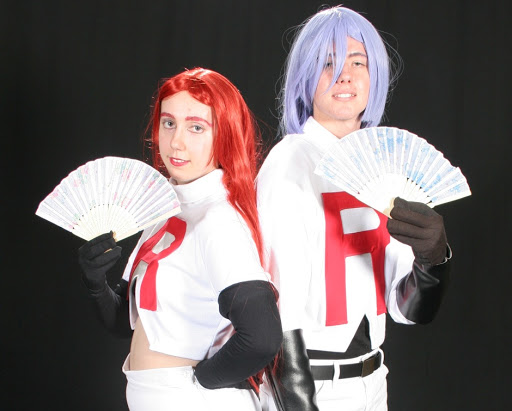
I apologize, but I’m afraid that there will not be a more substantial blog entry this week.  I was away at Otakon in Baltimore, Maryland this weekend and I’m still catching up on sleep and dealing with a severe case of Post Convention Depression.  I’m very sorry to disappoint any of you who were looking forward to an entry this week, but I promise to make it up to you next week.  Stay tuned!

(Here’s a consolation prize to show you what my brother and I were doing this weekend🙂

"Team Rocket is blasting off again!"
“Team Rocket is blasting off again!”

The Benefits of Fan Fiction

Fan fiction has a bad reputation on the Internet.  It’s usually looked down upon as a pass-time of rabid fangirls living out their fantasies with or between their favorite characters.  Poor spelling, poorer grammar, Mary Sues, and slash abound.

I’m not saying that fan fiction doesn’t have these elements because I’ve seen enough to know it exists.  What I am saying is there is a lot more to fan fiction than just that.

I used to think that fan fiction was the last resort for people who couldn’t write.  A cop-out for people who weren’t original enough, creative enough, or talented enough to be “real writers.”  Ironically, no one had defined fan fiction or even explained it to me at that point, so I had only the vague image of teenagers with no lives mangling someone’s characters because they couldn’t make their own.  What I didn’t realize was that I had been creating fan fiction ever since I could read.  I just didn’t know that’s what I’d been doing.

Continue reading “The Benefits of Fan Fiction”

Plot Writer versus Character Writer

How do you start writing your story?  What creates that spark of interest that makes you commit your time and energy to a project?  Every writer has their own peculiar modus operandi.  Some free-write while others outline, some write chronologically while other start at the end and work their way backwards.  The genus of an idea and how that idea is developed is also unique to each writer.  However, I have noticed a general trend among my friends who write and authors who discuss their creative process.  I speak in generalities and understand there are exceptions to every rule, but, in my experience, this trend creates two groups of writers:  Plot Writers and Character Writers.

Continue reading “Plot Writer versus Character Writer”

The Appeal of Fantasy

What is your favorite genre?  What kind of story inspires you, intrigues you, appeals to you?  Do you seek the spine-tingling screams of Horror?  The alien worlds and high stakes of Science Fiction?  The head-scratching maze of Mystery?  The depth and realism of Historical Fiction?  The pounding pulses and happy endings of Romance?  (If you would like a full list of the main genres and sub-genres of fiction, I highly recommend reading “Writer’s Digest Sub-Genre Descriptions.”)

I think everyone has a favorite genre or kind of book or story that they seek out over the others.  Some people like a wide variety of books while others are very particular about what they read and specialize in only a few types of books.  Some even focus on only one kind.  I don’t think one way is better than the other, although it is good to be at least exposed to other works and genres even if you don’t read them on a regular basis.  My personal area of expertise is the wide-eyed wonder of Fantasy.

Continue reading “The Appeal of Fantasy”

How the Office of Letters and Light helped me start (and stay) writing:

I think humans have a tendency to name things and make up random holidays.  Throughout the year you can find instances of this.  Did you know that January 10th is “Peculiar People Day?”  Or that October 28th is “Plush Animal Lovers’ Day?”  How about August being “National Catfish Month?”  A lot of these days and months have multiple names to them.  Personally, I think there’s a government committee somewhere whose sole purpose is to make these things up.

At any rate, this obsession with naming led to November being called “National Novel Writing Month.”  It’s rather nice having a month dedicated to the art and craft of writing, specifically novel writing, but for most people, this month passes by unnoticed.  However, the Office of Letters and Light decided to create something special.  They made a contest also called “National Novel Writing Month,” affectionately dubbed “NaNoWriMo” (pronounced “NAH-no-RHYME-oh”.)  It challenges would-be novelists to write 50,000 words, the minimum requirement for a novel, in 30 days.  There is no cash prize and there are no judges to evaluate your work.

The purpose of NaNoWriMo is to get writers to stop agonizing over perfecting each passage before moving on, to break the rut of perfectionism and procrastination that dogs the heels of authors.  In order to help writers complete that first draft, the emphasis is on quantity, not quality.  Now, granted, a writer could just sit down and type the same sentence over and over until they reached 50,000 words, but NaNoWriMo offers little incentive for such a path.  With no cash value and no one reading your work beyond the snippets you choose to post, there is no reason not to sit down and write.  All you have to enter is the number of words you wrote, and, at the end of the contest, an on-site word validator proves that yes, you actually did write that number of words.  If you reach 50,000 words, you get bragging rights and the satisfaction of reaching your goal.  And if you only wrote, say 30,000 words, or 20,000, or even 10,000, you still have more done now than you did at the start of November, which is an accomplishment in and of itself.

Continue reading “How the Office of Letters and Light helped me start (and stay) writing:”

Why Write? Why Not?

It’s ironic that, fifteen years ago, the last thing I wanted to be was a writer.

During my elementary years as a homeschooled student, composition class was my least favorite subject.  I suppose regular schools lump reading and writing under the heading “English,” but for me they were two separate things.  Reading was fun and fast.  Writing was a torture that dragged on for what felt like hours.  I remember my father tell me that I would probably grow up and become a great writer.  I looked up from grinding out another line of loopy, childishly careful cursive and declared that I would never, ever EVER become a writer.  Not in a million years!

Look who had the last laugh on that one.  As it turns out, Dad knew where my talents lay better than I did.  It’s interesting how it took me so long to come around to writing, considering how much I loved to read.  Plus, I always enjoyed crafting stories of my own, which I would reenact with my long-suffering toy horses, Barbie dolls, dinosaurs, and Hot Wheels cars.  (I believe we still have one of my stories involving My Little Ponies floating around on videotape somewhere…)  In any case, while I loved “playing” stories, it took me years before it occurred to me to write them down, or that my world- and character-creation was essentially the same thing real writers did.  I had other careers in mind.

Continue reading “Why Write? Why Not?”

What is my purpose here?

Good question.  I suppose, in order to answer that, we should progress logically through the five W’s and lone H.  Shall we begin?
WHO ARE YOU? 

My name is Kat Clements and I am a fantasy author-in-progress.

WHAT IS THIS?   

This is my writer’s blog where I will post information about my current projects, what inspires me to write, my influences, various tricks of the trade that I’ve learned, and answering any questions fans or other passers-by might have.  Each blog will have it’s own “theme” or a question that it will address.

WHEN DO YOU UPDATE?   

Updates should occur every Tuesday evening between 8:30pm and 9:00pm Eastern Standard Time.

WHERE ARE YOU? 

I’m an American writer (Pennsylvanian if you want to be more specific) and my blog will always be posted here on “The Cat’s Cradle.”  Check out my list of sites along the right side of the page if you are interested in seeing some of my poetry, artwork, fan fiction, or cosplay.

HOW ARE YOU DOING THIS?   

Sheer force of personality.  And fingers.  Originally via Blogspot/Blogger from June 2011-March 2013.  As of March 2013, I have officially switched over to using WordPress.  (If you’re wondering how I write or how I get my work done, you’ll have to wait for that blog entry!  It’s coming, I promise!)

WHY SHOULD BE READ THIS? 

Well, if you’ve gotten this far, you’re probably one of three people:

A) You’re a friend of mine and wanted to show your support by reading my blog.

B) You’re a fan of me/my writing and are curious to find out more about me/my writing process/my stories.

C) You’re an internet surfer who happened to stumble across my blog and for some reason it interested you enough to keep reading.  Welcome!  (Who knows, you might learn something useful!)

Thank you very much for reading and I hope that you will enjoy my work!